How Sales Follow-Up Builds or Breaks Buyer Trust
Stacey Hanke, CPAE Hall of Fame Keynote Speaker and Communications Expert
You finish a strong sales conversation.
The buyer was engaged. They asked thoughtful questions. You uncovered a few important priorities and agreed that there was enough interest to keep talking.
Then you send the follow-up.
“Thanks for your time today. It was great learning more about your business. Attached is some additional information about our solutions. Let me know if you have any questions.”
Technically, you followed up.
You also missed a big opportunity.
Your follow-up is not just administrative. It is part of the buyer’s experience of you.
It tells them whether you actually heard what mattered, whether you can connect your recommendation to their priorities and whether working with you is likely to feel clear or complicated.
That is why sales follow-up can build trust or quietly break it.
Why Does Sales Follow-Up Matter So Much?
Buyers are increasingly doing more of the buying process on their own.
Gartner’s 2026 B2B buyer research found that 67% of surveyed buyers preferred a rep-free buying experience, while 69% said they still preferred to validate AI-generated insights with sales representatives. In other words, buyers may want less seller involvement overall, but when they do involve a salesperson, that interaction needs to add real value.
That raises the bar for follow-up.
Your buyer does not need another generic email summarizing your company.
They need something that helps them think, decide or move forward.
Gartner also found that 73% of B2B buyers actively avoid suppliers who send irrelevant outreach. That finding came from a survey of 632 B2B buyers conducted in 2024.
Relevance matters before the first meeting.
It matters even more after the buyer has already told you what matters.
Your Follow-Up Proves Whether You Were Listening
Think about the signals a buyer gives you during a conversation.
They may say:
“We cannot afford another implementation that disrupts operations.”
“Our executive sponsor needs a simpler business case.”
“Finance is worried about the long-term cost.”
“We need something managers can actually use.”
Then your follow-up focuses on product features that were never discussed.
What did the buyer just learn?
Probably that you were waiting for your turn to sell.
Research on salesperson listening supports why that matters. A study of 162 business buyers found that salesperson listening was positively related to buyer trust and satisfaction. The research is older and should not be treated as proof that listening alone creates a sale, but it reinforces a basic principle of relationship selling: buyers notice when salespeople understand them.
This is why mindful listening should continue after the conversation ends.
Your follow-up is evidence.
Use Reflect. Reinforce. Request.
I recommend a simple framework:
Reflect. Reinforce. Request.
Reflect: Show the Buyer What You Heard
Start with their world.
Do not begin with your company.
Do not begin with:
“Thanks again for your time.”
You can still say thank you. Just do not make that the most meaningful thing in the message.
Reflect back the priorities, concerns or questions that mattered most.
For example:
“You identified two priorities for the rollout: reducing manager confusion and avoiding additional administrative work.”
That sentence does something important.
It tells the buyer:
“You heard me.”
Reflection should be specific enough that the buyer recognizes their own language and priorities.
Avoid:
“It sounds like efficiency is important.”
That is too generic.
Try:
“You want to shorten the approval process without creating another system managers have to learn.”
Now the buyer knows exactly what you heard.
Reinforce: Connect the Recommendation to Their Priority
Once you reflect what matters, reinforce how your recommendation connects to it.
Do not simply repeat the features you presented.
Translate those features into the buyer’s priority.
Instead of:
“Our platform includes automated workflows.”
Try:
“The automated approval workflow directly addresses the delay you described between operations and finance.”
The buyer should not have to make that connection on their own.
This is especially important when several stakeholders are involved.
Finance may care about cost.
Operations may care about implementation.
Technology may care about integration.
An executive sponsor may care about the business case.
The recommendation may stay the same, but the value needs to make sense from each person’s perspective.
That is exactly why Stacey’s newer work on influencing complex buying groups emphasizes adapting value without changing the core recommendation. The roadmap frames this as communicating one message through business, operational and role-specific lenses.
Request: Make the Next Step Clear
The final part is where a lot of follow-up falls apart.
Salespeople write:
“Let me know what you think.”
“Happy to answer any questions.”
“Would love to stay in touch.”
None of those tells the buyer what you want to happen next.
If there is a next step, ask for it.
Try:
“Let’s schedule 30 minutes next week with finance and operations so we can address the two concerns that surfaced today.”
Or:
“Please review the revised proposal with your executive sponsor before Friday. I’ll follow up Friday afternoon to hear what questions came up.”
Or:
“If the implementation timeline still feels workable, the next step is a technical review with your IT lead.”
That is clear without being pushy.
The buyer knows what happens next.
Good Follow-Up Reduces Work for the Buyer
This is an important standard.
After reading your follow-up, should the buyer have more work or less work?
A weak follow-up often creates more work because the buyer has to:
search for the important attachment
remember what was discussed
figure out which section matters
translate your features into their priorities
decide what to do next
forward a vague message internally
A strong follow-up reduces that friction.
Make it easy to scan.
Make the priorities obvious.
Use descriptive subject lines.
Attach only what is relevant.
Tell them which page or section matters.
If there are three next steps, name them.
If there is only one, do not invent three.
Your Follow-Up Should Be Easy to Forward
This matters a lot in complex sales.
The person you met with may not be the person making the final decision.
Your contact might need to forward your message to finance, operations, technology or an executive sponsor.
Write your follow-up so they can do that without rewriting your case for you.
Instead of:
“Attached is the deck we discussed.”
Try:
“Pages four and five summarize the cost impact for finance, while page seven addresses the implementation concern operations raised.”
Now your buyer has repeatable language.
You are helping the internal champion communicate your recommendation.
That is part of influence beyond the original conversation.
Follow Through on What You Promised
This sounds basic.
It is also where trust is won or lost.
If you say:
“I’ll send the revised pricing tomorrow.”
send it tomorrow.
If you promise:
“I’ll get you an answer from implementation by Friday.”
get the answer or communicate before Friday that you do not have it yet.
Do not make the buyer chase you.
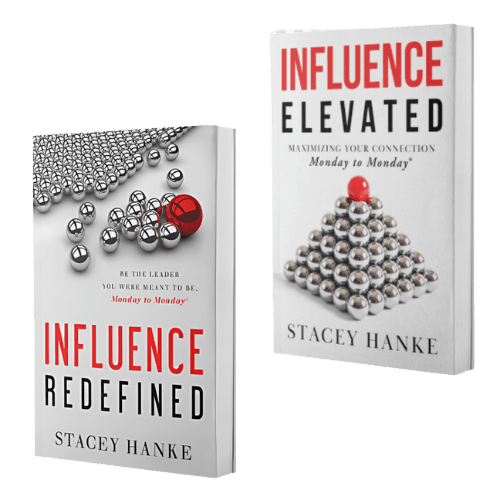
Influence Redefined makes this point clearly: trust grows when words and actions remain consistent, and influence weakens when they do not.
The same pattern appears in Influence Elevated, where timely responses and consistency across communication channels are treated as visible trust behaviors.
Follow-up is not a small administrative behavior.
It is evidence about whether you do what you say.
Buyer Trust Is Built Through Behavior, Not Polished Language
A beautiful email does not repair inconsistent behavior.
Research published in Industrial Marketing Management in 2024 looked specifically at how salespeople repair damaged buyer trust. The study found that behavioral repair strategies were more effective than verbal strategies in increasing perceived fairness, which in turn supported trust and commitment recovery.
That matters even when trust has not been damaged.
Your behavior is stronger evidence than your words.
You can say:
“We value your time.”
Then send three irrelevant follow-ups.
You can say:
“We’re highly responsive.”
Then disappear for a week.
You can say:
“We listened carefully.”
Then send the same generic deck every prospect receives.
The buyer will believe the pattern.
This is why clear, credible communication builds trust through repeated behavior, not through one polished interaction.
Stop Following Up Just to “Stay Top of Mind”
This phrase has created a lot of bad sales emails.
“Just checking in.”
“Bumping this to the top of your inbox.”
“Wanted to circle back.”
“Any thoughts?”
Ask yourself:
What value does the buyer receive from this message?
If the answer is only:
“They remember me.”
that is not enough.
Follow up because you have something useful to add.
That might be:
an answer to a question
a relevant example
new information
a simplified recommendation
a resource connected to their priority
clarification on an issue that was unresolved
a specific next step
The buyer does not need more reminders that you exist.
They need reasons to continue the conversation.
Do Not Confuse Persistence With Pressure
Follow-up matters.
So does judgment.
The buyer may need time to:
review internally
gather another stakeholder
compare options
wait for budget
solve a more urgent problem
If they tell you they need two weeks, emailing every two days does not demonstrate responsiveness.
It demonstrates that you are listening to your sales process more than their buying process.
Persistence becomes more credible when it is aligned with what the buyer said.
For example:
“You mentioned the budget meeting is next Thursday, so I’ll reconnect Friday morning unless something changes before then.”
Now the buyer knows you heard them.
Use the Buyer’s Language
One of the simplest ways to make follow-up more relevant is to stop translating everything into your company’s terminology.
If the buyer calls the problem “manager confusion,” do not suddenly call it “adoption friction.”
If they say “customer wait time,” use that phrase unless there is a reason to clarify it.
Using the buyer’s language reduces distance.
It also gives them words they can repeat internally.
This does not mean copying every phrase mechanically.
It means communicating in the world they already understand.
Know When Email Is the Wrong Follow-Up
Not every follow-up belongs in an email.
If the buyer raises a sensitive concern, disagreement is growing or your message is becoming three screens long, pick up the phone.
Written communication works well when the message needs:
documentation
a clear summary
a simple decision
a resource
a scheduled next step
A conversation may be better when you need:
nuance
clarification
objection handling
emotional context
real-time questions
Use the channel that helps the buyer understand, not simply the channel that is easiest for you.
Follow-Up After a No
Buyer trust still matters when the answer is no.
You may lose this opportunity and win the next one.
How you behave after a buyer says no becomes part of your reputation.
Do not become defensive.
Do not argue them back into the deal.
Do not vanish after months of telling them you care about the relationship.
You might say:
“Thank you for being direct. If you’re willing, I’d like to understand what ultimately drove the decision. It will help me communicate more effectively in the future.”
Then listen.
If there is no appropriate next step, respect that.
Influence Monday to Monday® means your communication does not suddenly change because you did not get the outcome you wanted.
Before You Hit Send, Use This Follow-Up Check
Ask:
Did I reflect the buyer’s actual priorities?
Does the message sound specific to this conversation?
Did I connect the recommendation to what matters to them?
Is the next step clear?
Am I sending only what is relevant?
Could the buyer easily forward this internally?
Did I deliver everything I promised?
Am I following up based on their buying process or my anxiety?
Does this communication build trust?
If the email could be sent to any prospect, it is probably not ready.
A Simple Follow-Up Example
Here is what Reflect. Reinforce. Request. might sound like:
Thanks for the conversation today. You identified two priorities: reducing manager confusion during rollout and avoiding additional administrative work.
Based on that, I’ve revised the recommendation to focus first on the manager communication component. The attached one-page summary also shows how the process fits into your existing workflow rather than adding another reporting step.
The next useful conversation is with operations and finance so we can pressure-test implementation and cost. Are you available Tuesday at 10:00 or Wednesday at 2:00?
That message is not clever.
It is useful.
That is what buyers need.
Follow-Up Is Where the Buyer Learns What Working With You May Feel Like
Think about that.
The sales presentation may be polished.
The follow-up shows the pattern.
Are you clear?
Do you listen?
Do you deliver what you promised?
Do you make things easier?
Do you respect the buyer’s time?
Do your words match your actions?
Those experiences start forming trust before a contract is ever signed.
That is why follow-up deserves more attention than a generic thank-you email.
Reflect what you heard.
Reinforce what matters.
Request the next step.
Then do what you said you would do.
That is how buyer trust grows Monday to Monday®.
Want Your Sales Team’s Follow-Up to Build Trust Instead of Noise?
Review the last three follow-up emails your team sent.
If they could have gone to any buyer, rewrite them.
Build stronger buyer conversations through Stacey Hanke Inc.’s sales communication workshops.