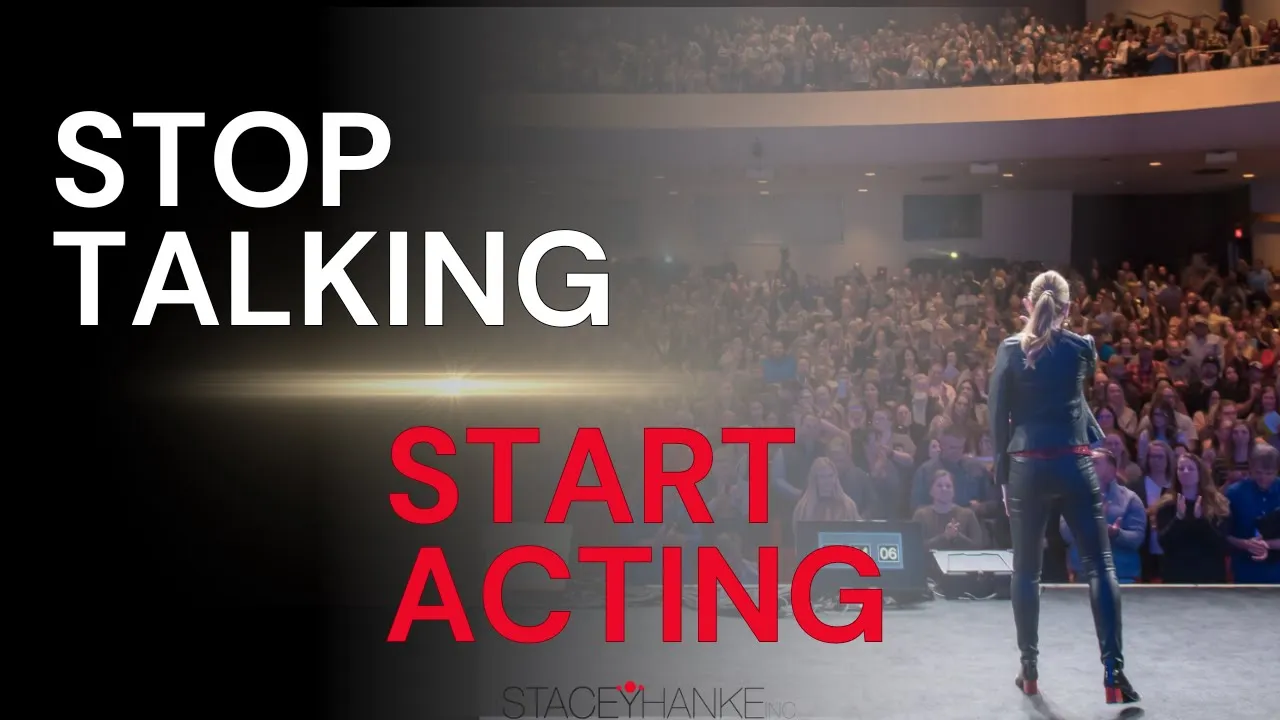

Actions Speak Louder Than Words: How Leaders Build Credibility Through Consistency
Stacey Hanke, CPAE Hall of Fame Keynote Speaker and Communications Expert
You tell your team you want honest feedback, but every time someone challenges your idea, you become defensive. You tell employees they're your priority, but during one-on-one conversations you're checking email. You tell everyone accountability matters, then repeatedly miss the deadlines you've committed to.
Which message do you think people believe?
Not the one you said.
Leadership credibility is built when your words and actions consistently tell people the same thing. When they don't, your behavior usually becomes the message people remember.
That's why actions speak louder than words.
People Experience Your Behavior, Not Your Intention
Most leaders don't intentionally undermine their credibility. The gap usually happens because they're paying attention to what they mean rather than what everyone else experiences.
You mean to be accessible, but you're always rushing.
You believe you're a good listener, but you interrupt.
You say you trust your team, but you insist on approving every small decision.
You encourage people to speak up, but they watch what happens when someone disagrees with you.
Your intentions may be good. Your listeners can't see your intentions. They experience your behavior.
That's why influence is built Monday to Monday®.
Model What You're Asking Others to Do
If you're asking your team to change a behavior, start by looking at your own.
Want meetings to begin on time? Arrive prepared and on time.
Want people to communicate more clearly? Get to the point.
Want your team to listen to one another? Stop interrupting.
Want greater accountability? Follow through on your commitments.
This becomes especially important during change. Gallup's work on leading organizational change emphasizes that leaders need to model the behaviors they expect employees to adopt. People aren't only listening to what leaders say about change; they're watching whether leadership behavior supports the message.
You can't communicate one standard and consistently demonstrate another without eventually affecting your credibility.
Look for the Small Contradictions
Leaders sometimes assume credibility is built or lost during big moments: the major presentation, difficult announcement, important client meeting or company crisis.
Those moments matter.
So do the small ones.
Think about what employees experience when you walk through the office. Do you acknowledge them? What happens when someone asks a question you don't like? How do you behave when you're running late? What do you do when you make a mistake? Do you give people your attention when they're speaking, or does your phone receive more eye connection than they do?
Trust develops through repeated experiences. Harvard Business Review's discussion of workplace trust identifies behaviors such as transparency, relationship-building and giving people appropriate autonomy as important elements of high-trust cultures.
None of those behaviors happens once.
They're patterns.
Ask Whether Your Words and Actions Match
Here's a simple exercise.
Write down three things you regularly ask of your team. Maybe it's accountability, responsiveness and collaboration.
Then ask yourself what employees consistently experience from you in each area.
If you ask for responsiveness, how quickly do you respond when someone needs your decision? If you expect collaboration, how often do you genuinely ask for input before deciding? If you expect accountability, what happens when you fail to deliver something you promised?
This isn't an exercise in beating yourself up. It's an exercise in awareness.
As I explain in Credibility Blind Spots, the behaviors affecting our influence are often easier for other people to recognize than they are for us.
Ask someone you trust what they see.
Then listen.
Consistency Doesn't Mean Perfection
You will make mistakes. You'll occasionally interrupt, miss a deadline or handle a conversation differently than you wish you had.
Credibility doesn't require perfection.
It requires awareness and accountability.
When your actions don't match your words, acknowledge it. If you missed a commitment, own it. If you handled a conversation poorly, go back and address it. If someone gives you feedback that surprises you, get curious before you get defensive.
The goal is not to create the appearance of consistency. It's to become more consistent.
What Are You Communicating Without Saying a Word?
Your team is always receiving a message from you.
Sometimes it's the message you carefully prepared for the meeting. Other times it's what you communicate when someone interrupts your day, challenges your recommendation or asks you to follow through on a promise.
Both matter.
Before you tell people what you expect from them, ask whether you're consistently demonstrating the same expectation yourself.
Your words tell people what you believe.
Your actions tell them whether to believe you.
If your leadership team needs greater consistency between what they communicate and how they show up every day, explore Stacey Hanke Inc.'s leadership development programs. We help leaders identify the behaviors shaping how others experience them and practice the communication habits that strengthen credibility Monday to Monday®.
Related articles


Why Great Leaders Never Stop Practicing Their Communication Skills
You will never outperform your ability to communicate. If you’re not consistently practicing, you’re consistently slipping.