

Credibility Blind Spots
More than 70% of managers believe they have a great relationship with workers, yet only 58% of employees agree.
Stacey Hanke, CPAE Hall of Fame Keynote Speaker and Communications Expert
Imagine you're driving 60 miles per hour, approaching your exit. You signal, check your mirror and start moving into the next lane. Suddenly, you hear a horn.
You quickly correct the car as another driver passes you.
Where did they come from?
Your blind spot.
Leadership works the same way. You can feel confident about how you communicate while everyone around you is experiencing something very different.
A credibility blind spot is a communication behavior you don't recognize in yourself but that other people see, hear and experience. Maybe you believe you're being thorough, while your listeners think you're long-winded. You intend to sound confident, but your pace makes you sound nervous. You believe you're approachable, but you interrupt people before they finish.
That's the danger of a blind spot. You can't fix what you don't see.
Your Intention Isn't the Same as Their Experience
I've worked with successful leaders who are surprised when they finally see themselves through the eyes and ears of others.
“I had no idea I did that.”
“I didn't realize I sounded that way.”
“Do I really say that word that often?”
Yes. You do.
And that's OK—once you know.
Self-awareness isn't simply knowing your strengths, weaknesses and intentions. It also requires understanding how other people experience you. Research discussed by Harvard Business Review distinguishes between internal self-awareness and external self-awareness—understanding how others view us.
That gap between intention and perception is where credibility blind spots live.
The higher you climb in an organization, the more important it becomes to look for them. People may be less willing to tell a senior leader, “You lost me five minutes ago,” “You interrupt us,” or “Your body language tells me you don't want my opinion.”
So don't wait for the blaring horn.
Go looking for the blind spot.
1. Record Yourself
Yes, I'm asking you to watch yourself on video.
I know. You don't like it.
Do it anyway.
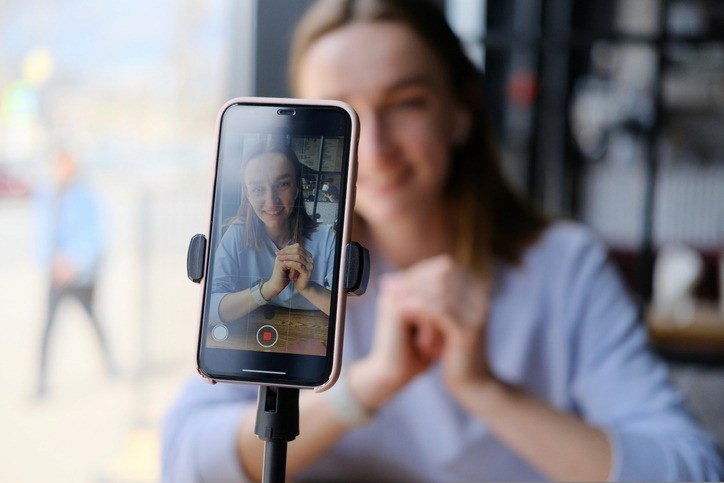
Record yourself during a meeting, presentation or practice conversation when appropriate and permitted. Then watch the playback without judging yourself personally. You're looking for behaviors.
Do you get to the point?
Where does your eye connection go?
Are you rushing?
Do filler words distract from your message?
What happens to your face when someone challenges you?
Does your delivery match the confidence you intended to communicate?
You experience yourself from the inside. Video lets you experience yourself more like your listeners do.
Pick one behavior to improve. Don't try to fix everything at once. Practice that behavior during your next conversation, then record yourself again.
2. Ask for Feedback You Can Actually Use
Stop asking, “How did I do?”
Most people will say, “Great!”
That's nice. It's also useless.
Ask a specific question instead.
“Did I get to the point quickly enough?”
“Where did I lose your attention?”
“What did you notice about my pace?”
“Did anything I did distract from my message?”
Then listen.
Don't explain. Don't defend. Don't tell the person what you meant to do.
Their experience is the information you're trying to understand.
This is also why feedback shouldn't disappear once someone earns a bigger title. The Center for Creative Leadership uses personalized feedback and coaching in executive development specifically to help senior leaders identify blind spots, understand opportunities and sustain behavior change.
Success doesn't eliminate your need for feedback. It increases it.
If receiving feedback is difficult for you, read When Feedback Hurts. Feedback isn't always comfortable, but discomfort can tell you something worth hearing.
3. Create Accountability
Awareness is only the beginning.
You can watch yourself on video and recognize that you ramble. You can receive feedback that you interrupt. You can discover that you avoid eye connection when you're uncomfortable.
Now what?
Choose one behavior and tell someone what you're working on.
Ask a trusted colleague, coach, mentor or accountability partner to watch for it. Give them permission to tell you when they see the old habit return.
Then practice.
Not just before the board presentation.
Not only when you're meeting an important client.
Not because the CEO is sitting in the room.
Practice Monday to Monday®.
Your credibility is built during everyday interactions—the quick conversation in the hallway, the virtual meeting, the email, the client call and the moment someone challenges your idea.
Those moments become your reputation.
Don't Wait for the Horn
A credibility blind spot doesn't mean you're a bad communicator. It means there's something you're not seeing yet.
Find it before it costs you an opportunity.
Record yourself. Ask for specific feedback. Choose one behavior. Practice it. Find someone who will hold you accountable.
Then do it again.
Because the question isn't whether you believe you're influential.
The question is whether other people experience you that way.
If you're ready to uncover the communication habits you can't see on your own, let's work together through executive mentoring. We'll identify how others experience you, strengthen the behaviors that build credibility and turn those behaviors into habits you can rely on Monday to Monday®.
Related articles

Why Great Leaders Never Stop Practicing Their Communication Skills
You will never outperform your ability to communicate. If you’re not consistently practicing, you’re consistently slipping.