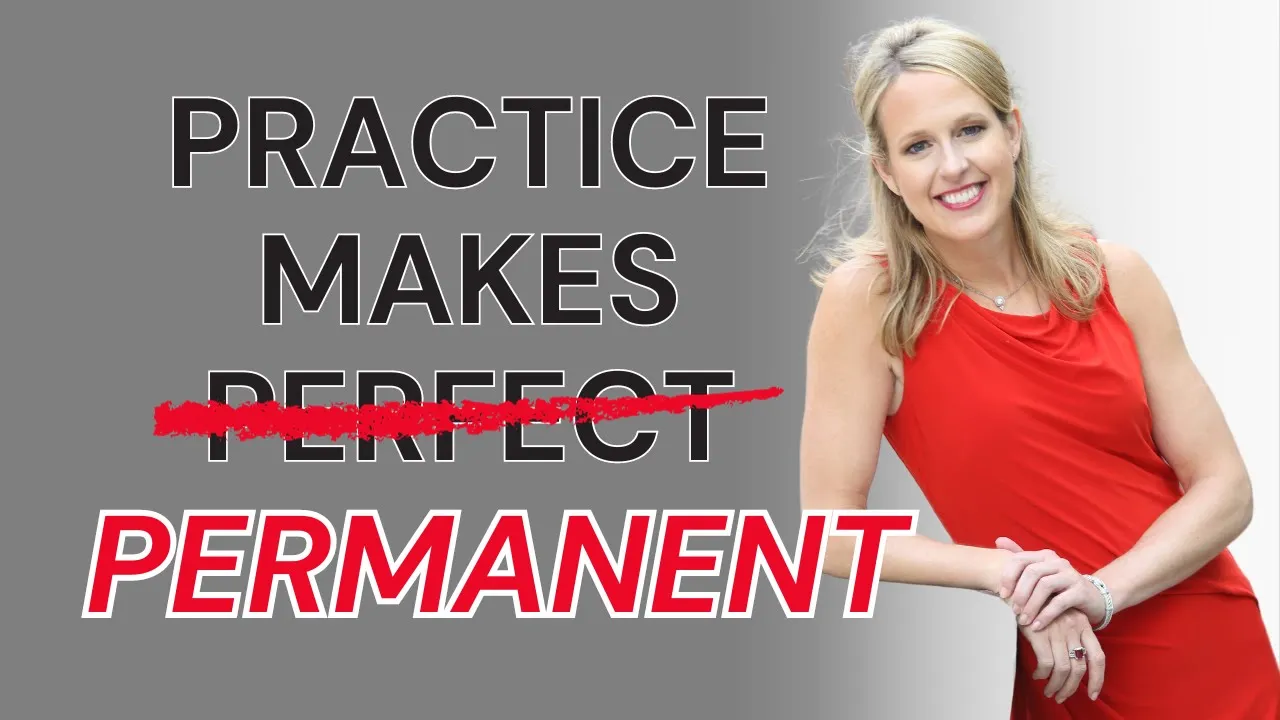

Discipline Creates Freedom: How Leaders Make Communication Skills a Habit
Great leaders have at least one common denominator: personal discipline.
Stacey Hanke, CPAE Hall of Fame Keynote Speaker and Communications Expert
Think back to when you first learned to drive a car. You probably had to think about everything: when to brake, how hard to accelerate, where to look, when to signal and whether you were staying inside your lane. Add merging onto a highway, and suddenly there were a dozen things competing for your attention.
Today, you probably get into your car and do most of those things without consciously thinking about them. What changed? You practiced. You repeated the behaviors until they became habits.
Communication works the same way.
Discipline creates freedom because practicing communication behaviors consistently makes them easier to use when your attention needs to be somewhere else—on your message, your listener and what's happening in the moment.
The strongest communicators aren't thinking, “Now I need to make eye connection. Now I should pause. Now I need to slow down.” They've practiced those behaviors enough that they can focus on the conversation rather than the mechanics.
Communication Habits Don't Develop by Accident
Many leaders believe experience automatically makes them better communicators. They've led hundreds of meetings, delivered countless presentations and had thousands of conversations, so they assume communication should come naturally.
Experience isn't the same as deliberate practice.
You can repeat the same distracting behavior for 20 years and simply become very experienced at doing it.
Current research on how habits form explains that habits develop through consistent repetition in context. When the behavior eventually becomes more automatic, we don't have to depend as heavily on conscious intention every time we perform it.
That's the freedom I'm talking about.
The goal isn't to make communication robotic. It's exactly the opposite. When strong behaviors become more natural, you have greater capacity to pay attention to the human being in front of you.
Practice One Communication Behavior at a Time
Imagine trying to learn how to drive while simultaneously perfecting every skill involved. You'd be overwhelmed.
Communication development works the same way. If you watch a recording of yourself and identify ten behaviors you want to change, don't try to fix all ten during your next meeting.
Pick one.
Maybe you rush when you're nervous. Practice pausing.
Maybe your eyes move constantly while you're speaking. Practice stronger eye connection.
Maybe you take three minutes to make a point that could take 30 seconds. Practice brevity.
Focus on that behavior until you're more consistent, then move to the next one.
The Center for Creative Leadership similarly emphasizes deliberate practice in leadership development and the value of giving leaders opportunities to practice challenging behaviors before the stakes become higher.
You don't build skill by knowing what you should do. You build it by doing it.
Practice During Real Conversations
This is where leaders sometimes make communication development harder than it needs to be. They think practice requires setting aside another hour in an already crowded calendar.
It doesn't.
Your calendar is full of practice opportunities.
If you're working on listening, practice during your next one-on-one. If you're working on brevity, use your next project update. If you're practicing stronger eye connection, work on it during your next team meeting.
The discipline comes from deciding what you're practicing before the interaction begins.
This is the same principle I discuss in Practice Makes Habits Stick: break development into manageable pieces, focus on one behavior and seek specific feedback rather than trying to improve everything at once.
Discipline Gives You More Freedom to Adjust
Here's where all that practice pays off.
When you're no longer concentrating so hard on your delivery, you can pay greater attention to your listener. You notice that they look confused, so you slow down. You see that they're ready to move on, so you stop explaining. You hear hesitation in their voice, so you ask a question instead of continuing with your prepared message.
You can adjust because your attention isn't consumed by the mechanics of communicating.
That's influence.
It's not delivering the exact message you rehearsed exactly the way you planned it. It's having enough control over your communication behaviors that you can respond to what your listeners need in the moment.
What Will You Practice Today?
Don't wait for your next big presentation to work on your communication. Choose one behavior and practice it during the conversations already on your calendar.
Record yourself when appropriate. Ask someone you trust for specific feedback. Practice again tomorrow, and keep going until the behavior requires less conscious effort.
Communication freedom isn't the absence of discipline. It's the result of it.
If you're ready to move beyond knowing what strong communication looks like and start practicing it, explore Stacey Hanke Inc.'s executive mentoring. Individualized feedback, focused practice and accountability can help turn the communication behaviors you're working on into habits you can rely on Monday to Monday®.
Related articles


Why Great Leaders Never Stop Practicing Their Communication Skills
You will never outperform your ability to communicate. If you’re not consistently practicing, you’re consistently slipping.